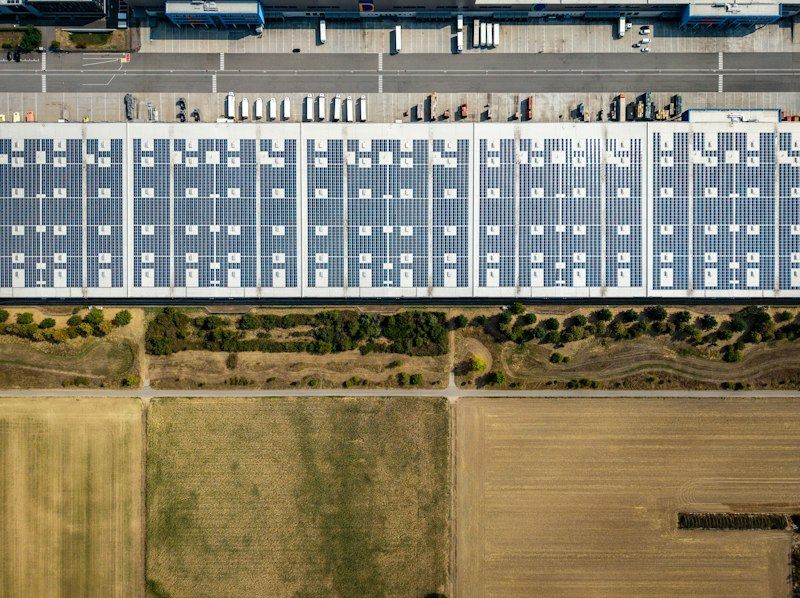
Array C is producing 6% less due to soiling
A gradual decline since late April, the typical pattern for dust from surrounding fields.
- Loss this year
- €876
- Estimated cleaning cost
- €560
- Best timing
- June, before the peak season
- Payback
- 8 months
Our software finds every loss and works out what is worth fixing. Our team arranges the repair and checks that output is back. You just approve.
The initial consultation is free and carries no obligation.
We see
Every string against the model
We diagnose
The cause, down to the string
We calculate
The cost and payback of the fix
We handle
The repair and its verification
A fault that doesn't trigger an alarm doesn't show up as an outage. It shows up as a slightly smaller invoice, month after month.
is the median output loss against the model across 1,128 plants
NREL, 2024is how far the average performance loss falls when a plant is inspected five times a year instead of once
Raptor Maps, Global Solar Report 2026of its energy is lost over 30 years when nobody looks after the plant
Model from the Solar PV Underperformance 2026 studyBefore the service call, before the invoice, before a small fault turns into a big one.
We don't compare output with last year or with an average, but with what the plant should physically have produced. Hour by hour, for every string.
Parhelion shows the affected string and estimates whether the cause is soiling, shading, degradation or a fault, and how the loss will develop over the next 30 to 180 days.
How much the plant will produce tomorrow, hour by hour, with an uncertainty band. On the first real plant, its error was half that of an estimate based on yesterday's output.
Knowing there is a problem isn't enough. You need to know what it costs and whether it is worth fixing.
A gradual decline since late April, the typical pattern for dust from surrounding fields.
The software estimates the cost of the work and how long it will take to pay for itself. Before you order anything.
We calculate how the loss will grow over the next 30, 90 and 180 days, so a postponed repair comes with its real price tag.
We rank interventions by payback, so you know what to deal with first and what can wait.
We are not just software. Our team sees the repair, the warranty claim and the final check through to the end.
We bring in a service company and tell it exactly where and what to repair. You know the price in advance, and we only place the order once you have approved it. If you have your own service partner, we work with them.
We prepare the measured data and technical documentation for the manufacturer, the supplier and the insurer. We keep track of deadlines so that no warranty lapses.
For us, a repair is only finished once output is back. After every intervention, and after hail or a windstorm, we compare the plant's condition with the model.
Without management, it all falls on you. With Sunalytiq, you have one partner who handles the whole chain.
You install nothing and commit to nothing until you have seen the results.
We talk through your plants, the tools you use today and what worries you most.
We connect the data, build the digital twin and go through the first findings with you. During the pilot, you pay nothing for the software or for our work. How the pilot works
Based on the results, we propose the scope and price of working together. You are under no obligation to continue.
You pay for the service companies' work, because it is work on your property. But you always know the price in advance, and we only place the order once you have approved it. If the defect is covered by a warranty, we try to get the manufacturer or supplier to bear the cost.
Yes. Your service partner gets a precise brief from us: where the fault is, what the likely cause is and what to bring. We then verify the result in the data.
An O&M contract usually means routine inspections on a fixed schedule. We work from data: the technician goes where the model has found a problem, and every job comes with a calculated cost and payback.
Yes. Most lost output comes not from defects covered by a warranty but from day-to-day operation: soiling, unresolved inverter errors, strings left switched off and outages dealt with too late.
According to our study, the output saved reliably outweighs the cost of management from roughly 75–100 kWp upwards. For smaller systems, we will tell you honestly at the consultation whether it makes sense.
In a short consultation, we go through your plants and tell you where we see the most room for improvement.